
Uluwatu
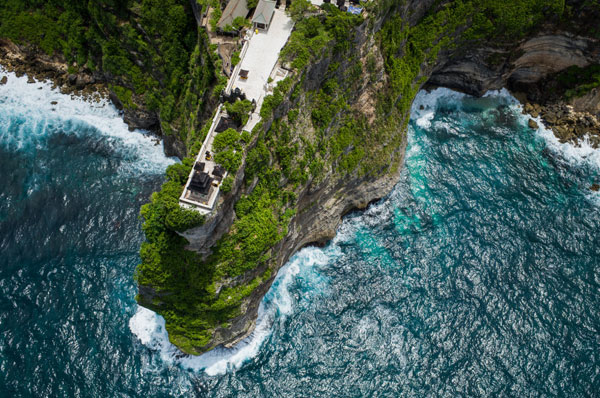
This is a large limestone peninsula which, bar a sliver of land just south of the airport, would be a separate island. It is rugged and dry, and pre-tourist development this was a real backwater of Bali.
The Bukit (as it is commonly referred to) includes the famous cliff-hanging temple at Uluwatu, a number of Bali's very best beaches including Balangan, and the top surfing spots on the island. As is so often the case, it was intrepid surfers who really opened up the eyes of the world to this part of the island.
Uluwatu Temple (Pura Uluwatu) is one of Bali's nine key directional temples. Though a small temple was claimed to have existed beforehand, the structure was significantly expanded by a Javanese sage, Empu Kuturan in the 11th Century. Another sage from East Java, Dang Hyang Nirartha is credited for constructing the padmasana shrines and is claimed to have attained Moksha here. Even more remarkable than the temple itself is its location, perched on a steep cliff 70 metres above the roaring Indian ocean waves. There are more steep headlands on either side and sunsets over Uluwatu are a sight to behold.
Note that while you are free to walk around the temple grounds, the central courtyards can only be entered during special rituals.
The temple is inhabited by large number of monkeys, who are extremely adept at snatching visitors' belonging, including bags, cameras and eyeglasses. Keep a very close grip on all your belongings and stow away your eyeglasses if at all possible. If you do have something taken, the monkeys can usually be induced to exchange it for some fruit. Needless to say, rewarding the monkeys like this only encourages them to steal more. Locals and even the temple priest or monkey ranger will be happy to do the job for you, for NO tip required.